Introduction
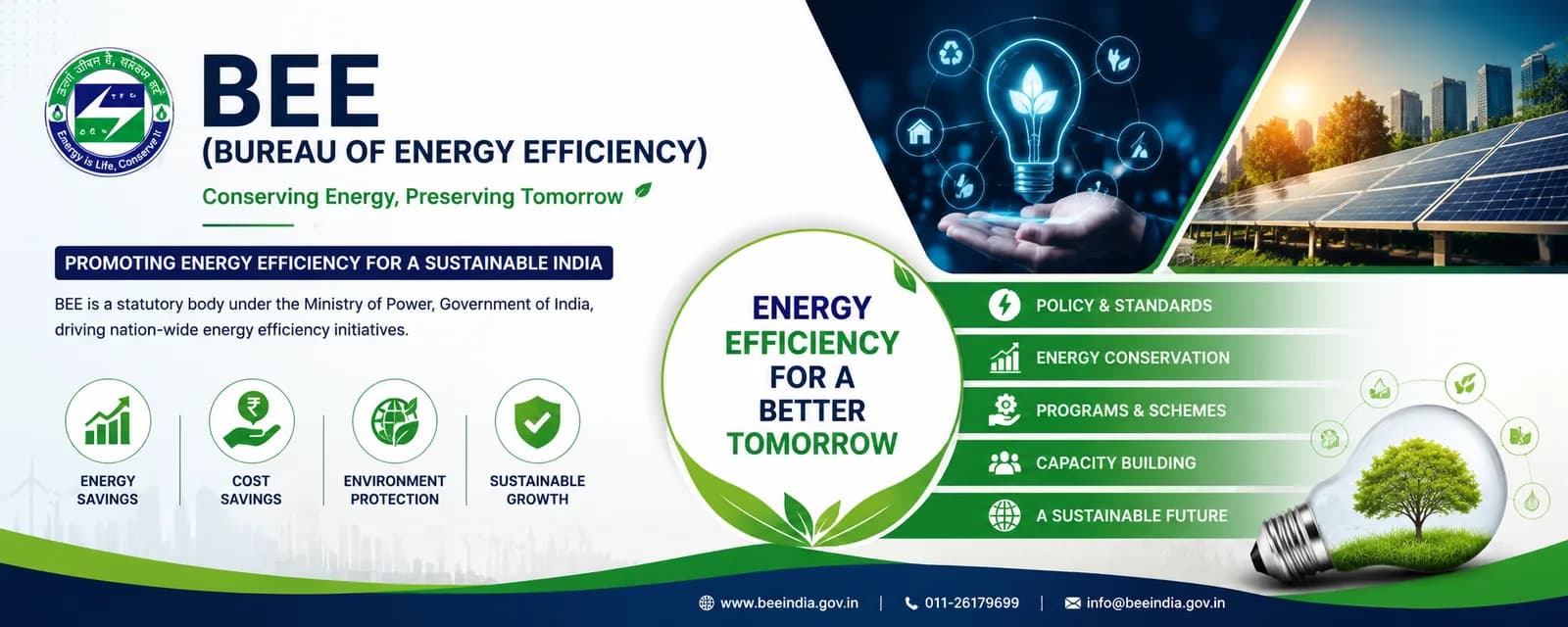
BEE Certification is an important compliance requirement for manufacturers and importers dealing with electrical appliances and energy-consuming products in India. Managed by the Bureau of Energy Efficiency (BEE), this certification program helps consumers identify energy-efficient products through standardized star labeling systems. Products with higher star ratings consume less electricity, helping consumers reduce energy costs and support environmental sustainability.
The BEE Star Rating Label is commonly applicable to products such as air conditioners, refrigerators, ceiling fans, LED lamps, televisions, and other electronic appliances notified under BEE regulations. Manufacturers must ensure that their products meet the prescribed energy performance standards before obtaining approval for BEE labeling.
BEE Certification not only helps businesses comply with Indian energy efficiency regulations but also improves product credibility and market acceptance. Certified products gain better consumer trust because energy-efficient appliances are increasingly preferred in both residential and commercial markets. The certification process generally includes product testing, technical documentation, application submission, and approval from BEE authorities.

Need help with BEE Registration, product testing, or star label approval? Ornate Quality Services provides complete support for your BEE Certification process in India.
What is BEE Certification?
BEE Certification is an energy efficiency certification program managed by the Bureau of Energy Efficiency under the Government of India. The certification helps consumers identify energy-efficient electrical appliances through the BEE Star Rating Label system. Products with higher star ratings consume less electricity and offer better energy savings.
BEE Certification is applicable to various products such as air conditioners, refrigerators, ceiling fans, televisions, LED lamps, and other electrical appliances covered under BEE regulations. Manufacturers must test their products in approved laboratories and meet prescribed energy performance standards before obtaining certification.
The BEE Star Label not only ensures regulatory compliance but also helps businesses improve product credibility, customer trust, and market competitiveness in India.
BEE Certification Process (Step-by-Step)
The BEE Certification process is managed by the Bureau of Energy Efficiency to ensure that electrical and electronic products meet prescribed energy efficiency standards in India. Manufacturers and importers must complete several important steps before obtaining approval to use the BEE Star Rating Label on their products.
Step 1: Identify Applicable Product Category
The first step is to determine whether the product falls under the mandatory or voluntary BEE labeling scheme. Manufacturers must also identify the applicable energy efficiency standards and technical requirements for their product category.
Step 2: Product Testing in Approved Laboratory
The product must be tested in a NABL-accredited or BEE-recognized laboratory. Testing is conducted to evaluate energy consumption, performance, and efficiency levels according to BEE guidelines. The laboratory issues a test report after successful testing.
Step 3: Documentation Preparation
Manufacturers need to prepare necessary documents such as company registration certificates, trademark details, product specifications, authorized signatory documents, test reports, and manufacturing details. Proper documentation is essential for smooth application processing.
Step 4: Online Registration on BEE Portal
The applicant must register on the official BEE portal and create a manufacturer account. Required company details, technical information, and supporting documents are uploaded during the registration process.
Step 5: Application Submission
After completing registration, the manufacturer submits the BEE Certification application along with product details, test reports, and applicable government fees. The application is reviewed by BEE authorities for compliance verification.
Step 6: Review and Approval by BEE
BEE officials verify the submitted documents, laboratory reports, and technical information. If the product successfully meets energy efficiency requirements, approval is granted for the use of the BEE Star Label.
Step 7: Grant of BEE Star Label
Once approved, the manufacturer receives permission to display the BEE Star Rating Label on certified products. The label indicates the energy efficiency level of the product, ranging from 1 Star to 5 Star.
Step 8: Renewal and Compliance Monitoring
Manufacturers must renew BEE Certification periodically and ensure continuous compliance with updated energy efficiency standards. Authorities may also conduct surveillance checks and product verification when required.
Products Covered Under BEE Certification
The Bureau of Energy Efficiency (BEE) has introduced energy efficiency labeling programs for various electrical and electronic products sold in India. Products covered under BEE Certification must meet prescribed energy performance standards before they can receive the BEE Star Rating Label. The purpose of this certification is to promote energy conservation, reduce electricity consumption, and help consumers identify energy-efficient appliances.
Several household and commercial electrical appliances are covered under mandatory and voluntary BEE labeling schemes. Common products include air conditioners, refrigerators, LED lamps, ceiling fans, televisions, washing machines, geysers, and distribution transformers. These products are tested for energy consumption and performance before approval is granted.
BEE Star Ratings range from 1 Star to 5 Star, where higher star ratings indicate better energy efficiency and lower power consumption. Products with better energy performance are preferred by consumers because they help reduce electricity bills and support environmentally responsible usage.
The list of products covered under BEE Certification may be updated from time to time by BEE authorities based on government energy conservation policies and market requirements. Manufacturers and importers must verify whether their products fall under mandatory BEE registration categories before launching products in the Indian market.
Products Covered Under BEE Certification
| Product Category | Examples of Products |
|---|---|
| Cooling Appliances | Air Conditioners, Refrigerators |
| Lighting Products | LED Lamps, Tube Lights |
| Home Appliances | Washing Machines, Geysers |
| Electronics | Televisions, Set-Top Boxes |
| Fans & Ventilation | Ceiling Fans |
| Industrial Equipment | Distribution Transformers |
| Kitchen Appliances | Induction Cooktops |
| Commercial Equipment | Commercial Refrigeration Units |
BEE Registration Requirements
To obtain BEE Certification, manufacturers and importers must fulfill specific registration requirements prescribed by the Bureau of Energy Efficiency. These requirements help ensure that electrical and electronic products comply with energy efficiency standards and are eligible for the BEE Star Rating Label in India.
One of the primary requirements is that the applicant must be a manufacturer or an authorized representative of the manufacturing company. The applicant must also have valid business registration documents, trademark details, and proper authorization for product registration under the BEE program.
Product testing is another major requirement for BEE Registration. The product must be tested in a NABL-accredited or BEE-recognized laboratory to verify energy consumption and performance standards. Valid laboratory test reports are mandatory during the application process.
Manufacturers are also required to provide technical product specifications, model details, energy performance data, user manuals, and labeling information. In addition, applicants must submit company-related documents such as GST registration, incorporation certificates, factory details, and authorized signatory documents.
The applicant must register on the official BEE online portal and submit the application along with supporting documents and applicable government fees. BEE authorities review the application, technical reports, and compliance details before granting approval.
For products covered under mandatory labeling schemes, compliance with BEE standards is legally required before the products can be sold in the Indian market. Manufacturers must also ensure that products continue to meet prescribed energy efficiency standards after registration approval.
BEE Registration Requirements
| Requirement Type | Details |
|---|---|
| Business Registration | Company incorporation, GST, trademark details |
| Product Testing | Testing in BEE-recognized laboratory |
| Technical Documents | Product specifications and energy data |
| Authorized Signatory | Identity and authorization documents |
| Online Registration | Registration on official BEE portal |
| Compliance Standards | Meeting prescribed energy efficiency requirements |
| Government Fees | Applicable application and registration fees |
| Product Labeling | Proper use of BEE Star Rating Label |
Documents Required for BEE Certification
Manufacturers applying for BEE Certification must submit various documents to the Bureau of Energy Efficiency during the registration process. These documents help verify the applicant's business details, product specifications, and compliance with prescribed energy efficiency standards.
- Company incorporation certificates, GST registration, and trademark authorization
- Identity proof of the authorized signatory
- Complete product details — model numbers, technical specifications, catalogues, user manuals
- Valid product test reports from NABL-accredited or BEE-recognized laboratories
- Factory address proof, authorization letters, and brand ownership documents
- Product labeling details as per BEE requirements
Additional documents may include factory address proof, authorization letters, brand ownership documents, and product labeling details. In some cases, BEE authorities may request further technical information depending on the product category and applicable certification requirements. Proper documentation helps ensure smooth processing of the application and reduces delays during approval.
BEE Certification Cost
The cost of BEE Certification depends on several factors such as the product category, applicable star rating program, laboratory testing requirements, number of product models, and government registration fees. The Bureau of Energy Efficiency (BEE) charges official fees for product registration, label approval, and certification processing.
One of the major expenses involved in BEE Registration is product testing. Manufacturers must get their products tested in NABL-accredited or BEE-recognized laboratories to verify energy efficiency and performance standards. Testing charges vary depending on the type of product and the complexity of testing procedures.
Apart from testing costs, businesses may also incur expenses related to documentation preparation, online registration, product labeling, and consultancy support if professional assistance is required. Renewal fees and additional charges may also apply for multiple product models or updated star labeling requirements.
The total BEE Certification cost can differ from one product category to another. Therefore, manufacturers should first identify applicable BEE requirements and testing standards to estimate the overall certification expenses accurately.
Timeline to Obtain BEE License
The timeline for obtaining a BEE Certification license depends on factors such as product category, laboratory testing, document preparation, and application review by the Bureau of Energy Efficiency. In most cases, the complete BEE Registration process may take approximately 4 to 8 weeks, depending on the accuracy of documentation and testing requirements.
One of the major factors affecting the timeline is product testing in NABL-accredited or BEE-recognized laboratories. Delays may also occur if additional technical clarifications or corrections are required during the application review process.
Manufacturers can reduce approval delays by preparing proper documentation, submitting accurate product details, and ensuring compliance with applicable energy efficiency standards. Professional guidance and timely coordination with laboratories and BEE authorities can also help speed up the certification process.
Validity & Renewal of BEE Certification
BEE Certification issued by the Bureau of Energy Efficiency is generally valid for a specific period based on the applicable product category and star labeling scheme. Manufacturers are required to maintain compliance with prescribed energy efficiency standards throughout the validity period.
Before the certification expires, businesses must apply for renewal by submitting updated documents, product details, and applicable renewal fees through the official BEE portal. In some cases, updated laboratory test reports may also be required to verify continued compliance with revised energy efficiency standards.
Manufacturers must ensure that certified products continue to meet BEE performance requirements even after approval. Timely renewal helps businesses avoid interruptions in product sales, labeling permissions, and regulatory compliance in the Indian market.
Benefits of BEE Certification
BEE Certification offers several advantages for manufacturers, businesses, and consumers by promoting energy-efficient products in the Indian market. Issued by the Bureau of Energy Efficiency, the certification helps consumers identify appliances that consume less electricity and provide better energy savings.
One of the major benefits of BEE Certification is improved consumer trust. Products carrying higher BEE Star Ratings are often preferred because they help reduce electricity bills and offer better long-term performance. This increases product credibility and strengthens brand reputation in the market.
BEE Certification also helps businesses comply with Indian energy efficiency regulations. Many electrical appliances require mandatory BEE labeling before they can be sold in India. Compliance helps manufacturers avoid legal issues and market restrictions.
Another important advantage is competitive market positioning. Energy-efficient products gain better acceptance among consumers, distributors, and commercial buyers. In addition, reduced energy consumption supports environmental sustainability by lowering carbon emissions and promoting responsible energy usage.
- Improved consumer trust through transparent energy efficiency ratings
- Compliance with Indian energy efficiency regulations for mandatory categories
- Better market acceptance among residential and commercial buyers
- Stronger brand credibility and competitive positioning
- Reduced electricity consumption supports environmental sustainability
- Helps businesses avoid legal issues and market restrictions
Overall, BEE Certification helps businesses improve market opportunities, customer confidence, and regulatory compliance while supporting national energy conservation goals.
Penalties for Non-Compliance
Non-compliance with BEE Certification requirements can lead to legal and regulatory actions by the Bureau of Energy Efficiency and other government authorities. Manufacturers or importers selling products covered under mandatory BEE labeling schemes without proper registration may face penalties, fines, or restrictions on product sales in the Indian market.
Using incorrect, fake, or unauthorized BEE Star Labels is considered a violation of applicable regulations and may result in legal action or product seizure. Authorities may also conduct market inspections and product verification checks to identify non-compliant products.
In addition to financial penalties, businesses may suffer reputational damage, loss of consumer trust, and disruptions in market operations. Therefore, obtaining and maintaining valid BEE Certification is essential for ensuring smooth business activities and regulatory compliance in India.
Case Study (Real Example)
A home appliance manufacturer in India planned to launch a new range of energy-efficient air conditioners in the market. Since air conditioners fall under the mandatory BEE Star Labeling scheme, the company needed approval from the Bureau of Energy Efficiency before selling the products.
Initially, the manufacturer faced challenges related to energy performance testing, technical documentation, and understanding the applicable BEE standards. The company submitted product samples to a NABL-accredited laboratory for testing and worked on improving product efficiency to achieve a higher star rating.
After completing testing and documentation, the manufacturer registered on the BEE portal and submitted the application along with required reports and government fees. Following technical verification and approval, the company received permission to use the BEE Star Rating Label on its products.
As a result, the certified products gained better customer trust, increased market demand, and improved competitiveness among other brands. The higher energy efficiency rating also helped consumers reduce electricity consumption and operating costs.
Conclusion
BEE Certification is an important compliance requirement for manufacturers and importers dealing with energy-consuming products in India. Issued by the Bureau of Energy Efficiency, the certification helps ensure energy efficiency, regulatory compliance, and better consumer trust through the BEE Star Rating Label system.
From product testing and technical documentation to application approval and labeling, the BEE Registration process requires proper planning and compliance management. Certified products not only help consumers save electricity costs but also improve market credibility and business competitiveness.
Frequently Asked Questions (FAQs)
BEE Certification is an energy efficiency certification program managed by the Bureau of Energy Efficiency. It helps consumers identify energy-efficient electrical appliances through the BEE Star Rating Label system.
Get Expert Assistance for BEE Certification
Need help with BEE Registration, product testing, documentation, or star label approval? Connect with Ornate Quality Services for complete support and professional guidance for your BEE Certification process in India.