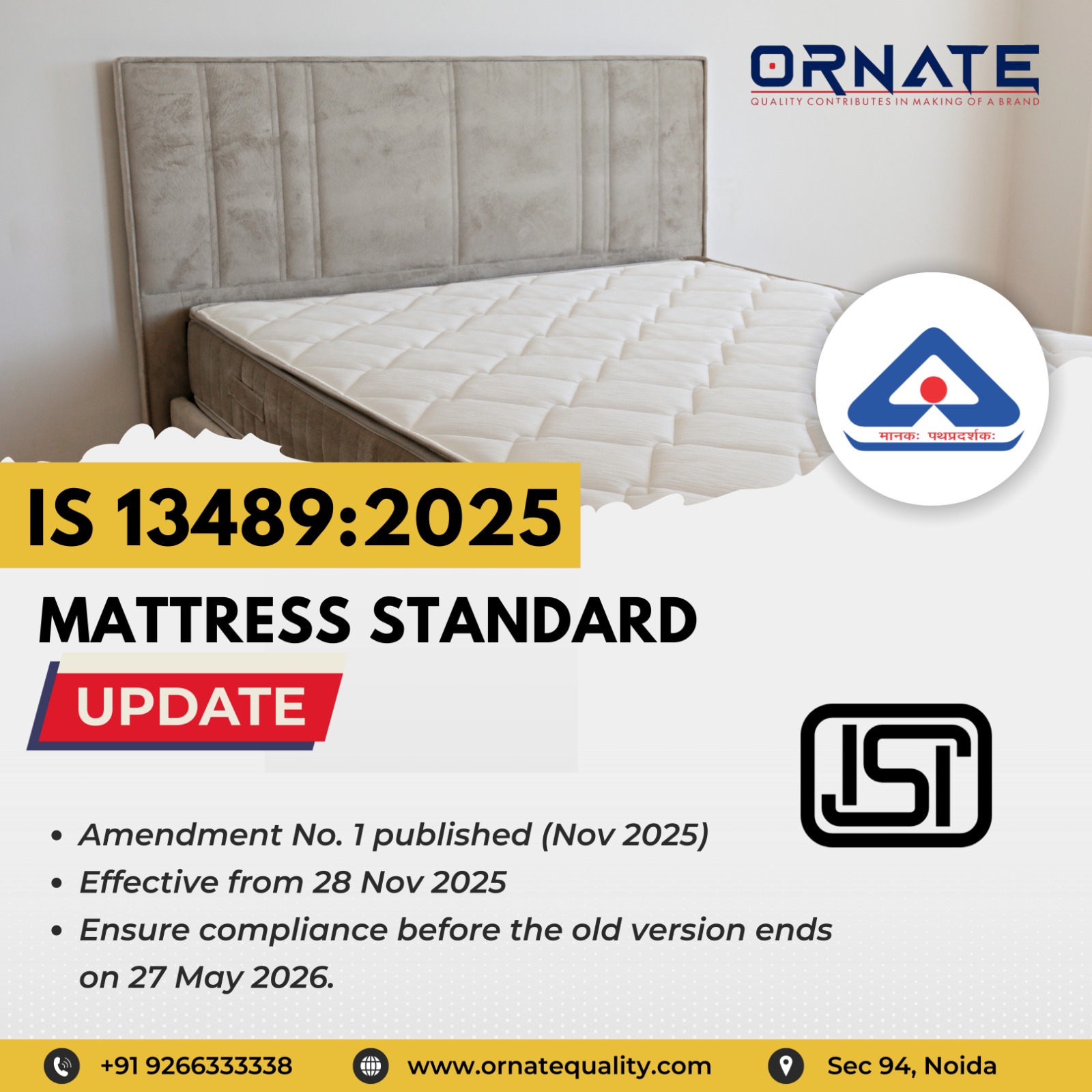
The Bureau of Indian Standards (BIS) has officially issued an amendment to IS 13489:2025 – Textiles: Bed Mattress — Specification (Second Revision). This update marks an important regulatory step for mattress manufacturers, importers, and retailers in India, ensuring improved safety, quality, and uniformity across the industry.
According to the official notification published on 5 December 2025, the amendment—Amendment No. 1, November 2025—has been formally established and notified for implementation.
IS 13489 2025
For an industry that serves millions of consumers, this update focuses on enhanced quality parameters, stricter compliance timelines, and better clarity for manufacturers aiming to meet BIS requirements.
What the New Amendment Says
As per the Gazette notification, BIS has introduced Amendment No. 1 for IS 13489:2025, with the following key details:
-
Standard Title: IS 13489:2025 – Textiles — Bed Mattress — Specification (Second Revision)
-
Amendment Number: 1
-
Amendment Published: November 2025
-
Date of Establishment: 28 November 2025
-
Validity of Standard Without Amendment: Until 27 May 2026
IS 13489 2025 revision (2)
This means manufacturers must update their production, testing, and quality processes to comply with the revised requirements before 27 May 2026, after which the unamended standard will no longer remain valid.
Why This Amendment Matters
1. Strengthens Quality Assurance
Mattresses are essential household products directly linked to health, hygiene, and comfort. The revised standard is expected to enhance:
-
Material quality
-
Fabric durability
-
Safety parameters
-
Structural performance
The amendment aims to make mattress manufacturing more aligned with global quality benchmarks.
2. Ensures Consumer Safety
BIS standards traditionally focus on:
-
Chemical safety
-
Textile hygiene
-
Flammability criteria
-
Load-bearing capacity
By updating these requirements, BIS is ensuring that consumers get mattresses that are safer, more durable, and healthier to use.
3. Provides a Clear Compliance Roadmap
The amendment gives manufacturers a transition window until May 2026, allowing sufficient time to adopt new testing protocols and update internal quality systems.
Impact on Manufacturers and Importers
Compliance Requirements
Once the amendment becomes fully enforceable, manufacturers must:
-
Update their mattress design and production methods
-
Align materials used with revised specifications
-
Conduct renewed BIS testing under the updated clauses
-
Update labeling, packaging, and certification documents
Impact on Importers
Importers bringing mattresses into India must ensure:
-
Products strictly adhere to the revised standard
-
Updated test reports are submitted
-
Compliance is demonstrated before customs clearance
Any product failing to meet the updated requirements could face rejection.
How Manufacturers Should Prepare
Here’s what businesses should do before the enforcement date:
1. Conduct a Compliance Gap Analysis
Evaluate current manufacturing processes and identify areas that require changes as per Amendment No. 1.
2. Update Testing and Certification
Coordinate with BIS-recognised labs for updated mattress testing.
3. Review Raw Material Standards
Ensure textiles, foam, springs, and other components meet the revised criteria.
4. Train Internal Quality Teams
Staff should be aware of new testing parameters and documentation requirements.
5. Complete Compliance Before Deadline
The unamended version of the standard remains valid only till 27 May 2026, so timely action is crucial.
Conclusion
The amendment to IS 13489:2025 marks a significant step by BIS to enhance mattress quality and consumer protection in India. With the updated specifications now officially established, the industry must begin transitioning immediately to ensure compliance ahead of the May 2026 deadline.
For manufacturers and importers, this is not just a regulatory requirement—it’s an opportunity to elevate product quality, strengthen brand credibility, and meet modern consumer expectations.